


Terra Madre Salone del Gusto 2024

Why EVERARD Consulting & Communication Went to Turin—and How It Shapes Our Vision for Sustainable Food Systems
Terra Madre Salone del Gusto 2024: Where Food Becomes a Blueprint for Resilience
In September 2024, EVERARD Consulting & Communication traveled to Turin for Terra Madre Salone del Gusto, the world’s most influential gathering dedicated to good, clean, and fair food. This wasn’t just another conference—it was a living manifesto for the future of food, where farmers, chefs, activists, and policymakers converge to reimagine how we nourish ourselves and the planet. For us, attending wasn’t about passive observation; it was about immersion in a movement that aligns perfectly with our mission: helping communities build food systems that are sustainable, equitable, and resilient.

Our work is rooted in the belief that food is not just sustenance—it’s a lever for climate action, economic vitality, and social cohesion. Whether we’re designing local food hubs, organizing sustainable gastronomy events, or advising municipalities on food resilience strategies, we’re guided by one question: How can food systems adapt to the challenges of today while nourishing the generations of tomorrow? Terra Madre didn’t just answer that question—it showed us how to ask it better.
Why Turin? Why Now?
Terra Madre Salone del Gusto is where theory meets practice. This year’s theme, "RegenerAction: Our Soil, Our Future," was a call to arms—a recognition that the health of our food systems is inseparable from the health of our soils, our communities, and our climate.
For four days, Turin became a microcosm of the world we’re working to build: one where food is local first, where biodiversity is celebrated, and where every bite tells a story of care—for the land, the producer, and the eater.
We went to Turin because the future of food isn’t written in boardrooms—it’s grown in fields, cooked in kitchens, and shared at tables. And if we’re going to help our clients—municipalities, producers, and organizations—navigate the transition to sustainable food systems, we need to see, taste, and understand what’s possible when a community commits to food sovereignty.
What We Learnedat Terra Madre: Five Insights That Will Shape Our Work
1. Diversity Is the Bedrock of Resilience
The Market of the Earth at Terra Madre was a sensory explosion—800 producers from over 100 countries, each offering foods tied to their land, their culture, and their traditions. What struck us wasn’t just the variety of flavors, but the variety of knowledge. From heirloom grains cultivated in the Italian Alps to indigenous honey harvested in the Amazon, every product was a testament to adaptation, tradition, and resistance against the homogenizing forces of industrial agriculture.
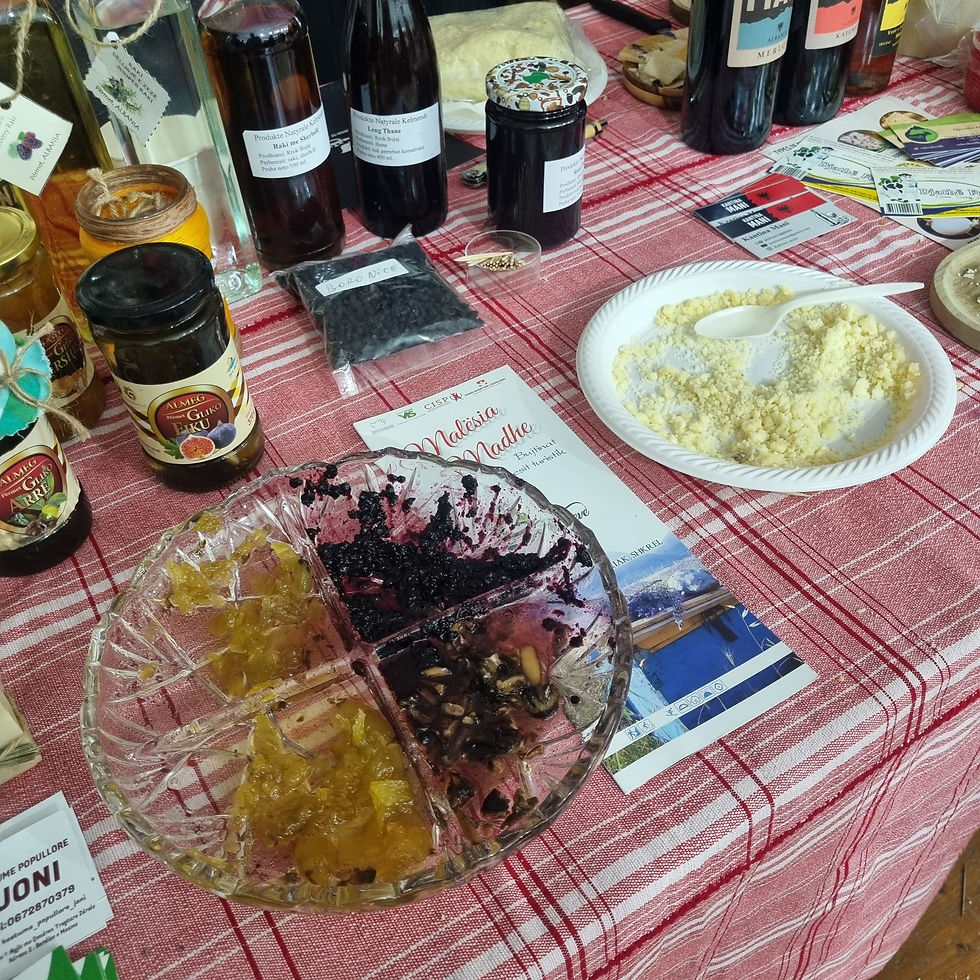
Why this matters for our clients: Resilience isn’t built on monocultures—it’s built on diversity. Whether we’re advising a municipality on local food procurement or helping a region design a circular food economy, Terra Madre reinforced a critical lesson: The more varied the system, the stronger it is. For a city like Differdange, this means mapping and supporting small-scale producers, preserving seed biodiversity, and creating markets that make local food the default choice.
2. The Slow Food Presidia: A Model for Saving What Matters
One of the most moving experiences at Terra Madre was encountering the Slow Food Presidia—a global network of small-scale producers who are safeguarding traditional foods at risk of disappearing. These aren’t just products; they’re living heritage. From Sardinian bottarga to Peruvian native potatoes, each Presidium represents a community’s refusal to let their food culture be erased by globalization.

How we’ll apply this: Too often, "sustainable food" is reduced to a buzzword. The Presidia model shows how to turn heritage into action:
Document and promote endangered foods—whether it’s Luxembourg’s forgotten apple varieties or a local grain on the brink of extinction.
Create economic incentives for producers to stay small but viable—through direct-to-consumer markets, municipal procurement policies, or tourism partnerships.
Educate consumers on the value of these foods—not as relics, but as keys to food security.
3. The Terra Madre Market as a Classroom: Where Transparency Builds Trust
At Terra Madre, the Market wasn’t just a place to buy—it was a place to learn. Producers didn’t just sell their wares; they explained their methods. They talked about soil regeneration, water conservation, fair labor practices, and why their way of farming matters. This transparency is what builds trust—and trust is what makes sustainable food systems last.
What this means for our work: We’ve seen too many "sustainable food" initiatives fail because they talk at people, not with them. Terra Madre proved that real change happens when people understand the "why" behind the "what."

For example:
When we organize food festivals or local markets, we’ll ensure they’re not just transactions, but conversations—where producers and consumers meet, learn, and co-create.
For municipalities, we’ll advocate for public markets with an educational twist—where residents can see, taste, and learn why local, seasonal, and organic food is a climate solution.
4. Policy Meets Practice: How Cities Can Lead the Transition
Terra Madre’s forums brought together mayors, farmers, and activists to discuss how cities can shift from industrial food systems to regenerative ones. One standout session featured Milan’s Food Policy, which has halved food waste in schools and doubled local procurement—proving that policy can drive change at scale.
How we’ll use this: At EVERARD, we specialize in turning high-level goals into on-the-ground action.

Terra Madre gave us concrete policy tools, such as:
Municipal food procurement policies that prioritize local, organic, and fair-trade products.
Food waste reduction programs tied to schools, hospitals, and public canteens.
Urban agriculture incentives, like tax breaks for rooftop farms or community garden grants.
5. The Power of Networks: No One Saves the Food System Alone
Perhaps the most valuable takeaway from Terra Madre was the power of networks. The event itself is a network of networks—farmers, chefs, scientists, and policymakers all working toward the same goal: a food system that nourishes people and the planet.
We’ve always believed that collaboration beats competition.

Terra Madre showed us how to scale this mindset:
For local food hubs, we’ll focus on connecting producers, schools, restaurants, and local governments in a regional network—because resilience comes from shared resources and knowledge.
For municipalities, we’ll push for cross-sector partnerships—like the ones we’ve built for past projects—to ensure that climate actions are rooted in community needs.
For Municipalities: Building Food Systems That Last
Cities and municipalities are already leaders in sustainability. Terra Madre gave us new tools to help them go further:
Local Food Hubs: Places where markets, education, and logistics come together to make sustainable food accessible, visible, and desirable.
Policy Roadmaps: Using Milan’s model, we’ll help cities embed food resilience into their climate plans.
Citizen Engagement: Designing events and programs where residents co-create their food future—because ownership drives change.


Comments